
Google I/O 2026: Gemini Spark and the Rise of AI Coworkers
The short answer
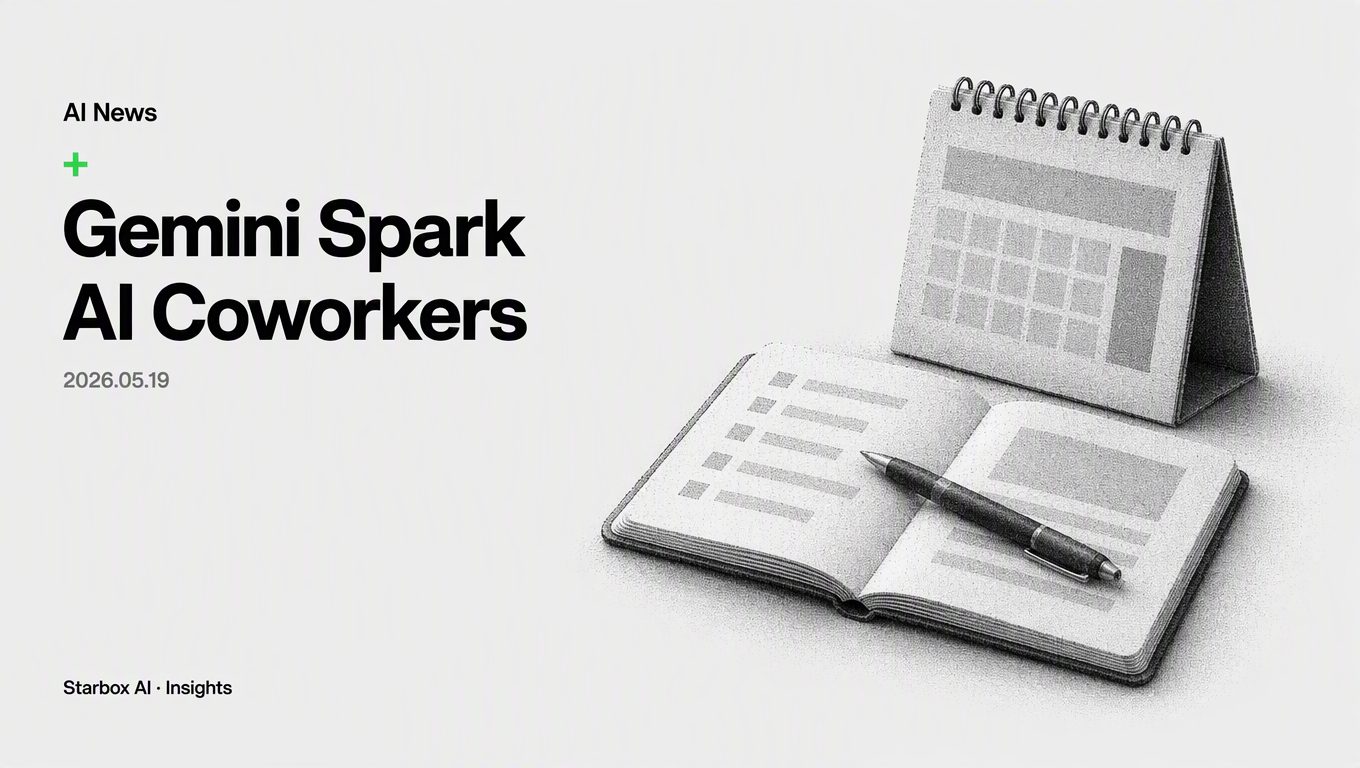
Google I/O 2026 unveiled Gemini Spark and 900M MAUs, marking a shift from on-demand chatbots to continuous AI coworkers running inside enterprise workflows.
At Google I/O 2026 in Mountain View, California (May 19–20), Google delivered a clear message: AI is no longer just a software tool you open to run a prompt. It is shifting into an always-on coworker operating in the background.
Opening the keynote, Sundar Pichai shared a milestone figure: Gemini has surpassed 900 million monthly active users, up from 500 million just three months ago.
The Three Most Important Announcements
Gemini Spark: Spark is an always-on AI agent that coordinates across Gmail, Docs, Google Calendar, and Google Slides around the clock. Instead of waiting for an explicit command, Spark proactively tracks tasks, organizes incoming information, and flags upcoming deadlines. Crucially, Google built in guardrails: Spark requires explicit user confirmation before taking high-stakes actions, such as initiating payments or sending emails. Users also retain full control over which apps Spark can access.
Gemini 3.5 Flash and Gemini Omni: Google unveiled its next-generation models. Gemini 3.5 Flash outperforms the previous flagship, Gemini 3.1 Pro, across coding and autonomous agent benchmarks, and is generally available immediately. Gemini Omni is a native all-to-all multimodal model capable of processing and generating across formats, beginning with video.
Antigravity 2.0: Google upgraded its agent-first developer platform with a standalone desktop application, enabling developers to orchestrate and debug multiple agents locally. For enterprise teams, Antigravity inherits Google Cloud's enterprise data privacy protections, allowing companies to build and run agent fleets within their existing compliance boundaries.
Google also targeted enterprise market share directly against OpenAI and Anthropic by dropping the price of its AI Ultra tier from $250 to $200 per month and introducing lower-tier enterprise plans.
What "Always-On Agents" Mean for Enterprise Software
Gemini Spark signals a structural transition from reactive chat interfaces to background intelligence layers. Instead of opening a chat window and engineering prompts, the agent continuously manages context, monitors states, and moves projects forward.
This shift mirrors the broader design philosophy behind domain-specific AI agents: eliminate the burden of "learning how to prompt AI" and embed the intelligence directly into existing workstreams. Data from digital adoption platform WalkMe shows that the primary reason enterprise employees reject new AI rollouts is rarely resistance to technology; it is tool fatigue—the reluctance to learn yet another standalone interface. Spark’s ambient design addresses that problem directly.
The Starbox AI View: General Agents Create Demand for Vertical Systems
If Google is building background AI assistants into Google Workspace, where does that leave specialized enterprise AI platforms?
Specialized platforms become more essential, not less. Gemini Spark is a horizontal assistant built for personal productivity: calendar management, inbox triage, and document drafting. A revenue or marketing team, however, requires agents grounded in industry context, proprietary brand guidelines, and specialized multi-step workflows.
This is the exact reason Starbox AI relies on a three-layer architecture: Organization, BOX, and specialized Agents.
The smoother the user experience becomes in horizontal AI tools, the higher enterprise expectations will climb for vertical agents. Every advancement Google ships in general-purpose agent infrastructure helps educate the enterprise market on what specialized systems should deliver.
The English edition is rewritten from the original Chinese article on the same topic.
Starbox AI is an AI marketing company based in Hangzhou, China. This article draws on Starbox project work. Please credit the source when quoting.
Related reading
 AI News
The 180-Day AI Model Half-Life: Why Model Lock-In Is a Liability
Anthropic's S-1 reveals models older than six months generate under 20% of revenue. Lock your workflows to business protocols, not specific LLMs.
Oct 29, 2026 · 5 min read
 AI News
How AI Enters the Org Chart: 3 Models from OpenAI
Before buying software or cutting heads, leaders must decide if AI belongs beneath employees, alongside them as peers, or between them as a router.
Oct 29, 2026 · 5 min read
 AI News
Why Code-Driven AI Agents Beat Prompt Engineering for Content
LangChain slashed content production costs from $8 to $0.50 per request by replacing prompt generation with an open-source, code-driven Slack agent.
Oct 28, 2026 · 5 min read