
Should You Buy an AI Knowledge Base for GEO Customer Acquisition?
The short answer
Mounting a private AI knowledge base does not help public GEO. It serves internal operations, while public AI citations require crawlable, authoritative web assets.
The Pitch vs. The Reality: Why Private RAG Cannot Feed Public AI Search
If an AI vendor tells you that uploading your company brochures and technical PDFs into a proprietary AI knowledge base will cause major search models to recommend your business, stop your procurement process.
The sales pitch sounds straightforward: spend a few thousand yuan, mount your product catalog into a Retrieval-Augmented Generation (RAG) knowledge base, and enjoy preferential recommendations when buyers query public engines like Doubao (ByteDance's AI assistant) or DeepSeek. For small and mid-sized enterprises evaluating generative engine optimization (GEO), this pitch sounds like an inexpensive shortcut to new customer acquisition.
It does not work that way.
Purchasing a private RAG knowledge base to win public customer acquisition rests on a fundamental technical misunderstanding. A private knowledge base creates an isolated query layer for your own channels. It does not push data into the open-web training corpuses or real-time retrieval indexes used by general-purpose AI search engines.
If your goal is public customer acquisition through GEO, spending money on private knowledge base mounting will yield zero return. That money delivers value only when applied to internal cost reduction or private-traffic customer service.
Intranet Silo vs. Public Web Index: How AI Engines Actually Cite Sources
To understand why this vendor promise fails, consider how public AI engines retrieve information compared to how a private RAG setup functions.
When a prospective buyer asks an engine like DeepSeek or Doubao to recommend a vendor, the engine executes a multi-stage retrieval and generation pipeline:
- Candidate Retrieval: The engine queries its pre-trained weights and live web-crawling index to pull 20 to 100 relevant sources.
- Scoring and Ranking: Candidate documents are ranked by semantic relevance, entity authority, platform credibility, and freshness.
- Chunk Synthesis and Generation: The large language model splits the top candidates into chunks, evaluates factual consensus across independent sources, and synthesizes an answer with citations.
A private RAG knowledge base sits entirely outside this architecture. When you upload documentation into a third-party software-as-a-service (SaaS) platform, your data is stored in a private tenant database. That database is accessible only when an authorized user queries that specific software interface or an integrated website widget.
Public web crawlers run by major AI companies cannot crawl private tenant databases. Even if they could, search algorithms ignore unverified, paywalled, or isolated silos that lack external web trust signals.
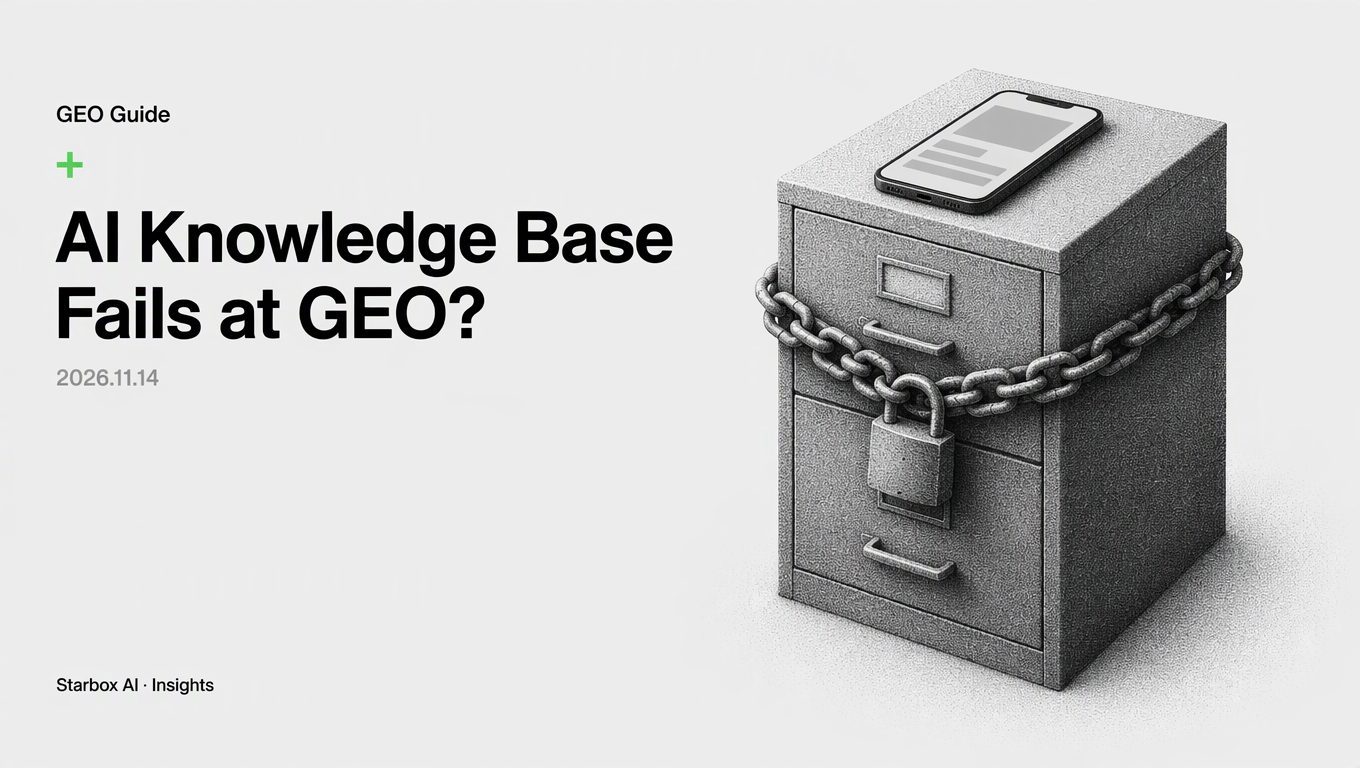
Relying on a private knowledge base to influence public AI engines is like printing an internal company handbook, locking it inside a file cabinet, and expecting regional newspapers to quote it as front-page news.
A study from Ahrefs analyzing 1.4 million prompts found that 67% of top-cited pages in AI answers stem from original research, primary data, or recognized third-party sources. AI models evaluate factual consensus across independent domains. An internal file mount provides none of these signals.
Technical Comparison: Private AI Knowledge Base vs. Public GEO Acquisition
Before allocating budget, compare what a private RAG system does against what an actual public GEO acquisition program requires.
| Evaluation Dimension | Private AI Knowledge Base (Mounted RAG) | Public GEO Customer Acquisition |
|---|---|---|
| Primary Goal | Information retrieval within closed systems | Visibility and citation in open AI answers |
| System Boundary | Enterprise internal server or private SaaS tenant | Publicly indexable web and platform ecosystems |
| Data Accessibility | Restricted by login, API tokens, or firewalls | Publicly accessible to web crawlers and spiders |
| Core Mechanism | Vector embedding matching on uploaded files | Semantic matching across authoritative web chunks |
| Citation Pre-requisites | Document parsing and local vector database | Web indexing, domain authority, entity consistency |
| Target Audience | Existing staff or active visitors on your site | Prospective buyers querying public AI assistants |
| Typical Monthly Cost | Platform subscription plus maintenance fees | Content production, digital PR, and platform seeding |
| Attribution of Results | Reduced customer support handle times | Growth in AI search citations and inbound inquiries |
This architectural gap shows why buying an AI knowledge base cannot substitute for GEO. The two tools solve entirely different operational problems.
When to Spend a Few Thousand on a Knowledge Base (and When to Walk Away)
A private knowledge base is a legitimate software product when applied to the correct operational scenario. Spending a few thousand yuan makes sense under specific conditions, but it is a complete waste under others.
Scenarios Worth the Investment
- Pre-Sales Product Consultation on Owned Channels: You operate an e-commerce storefront or B2B product catalog with hundreds of complex SKUs. A mounted knowledge base connected to a website chat widget helps visitors quickly find exact technical specifications without routing every basic question to a human sales rep.
- Internal SOP and Knowledge Retrieval: Your team spends hours searching through scattered internal folders, compliance rules, or technical manuals. Storing these documents in an indexed, searchable RAG repository reduces internal friction and speeds onboarding.
- Customer Support Ticket Deflection: Existing clients repeatedly submit tickets regarding routine software bugs, configuration steps, or warranty terms. Deploying a private knowledge base behind a self-service support portal resolves these queries automatically.
Scenarios Where You Should Walk Away
- Seeking Inbound Leads from Public AI Queries: If the vendor claims that mounting your PDF will make your brand appear when buyers ask Doubao or DeepSeek for "the best manufacturers in my industry," walk away immediately. Public engines cannot query your private vendor dashboard.
- Attempting to Bypass Content Publication: Some buyers purchase knowledge bases hoping to avoid the work of publishing public articles, case studies, and industry guides. A private database cannot compensate for an absent public digital footprint.
- Expecting Model-Level Brand Authority: Uploading marketing claims to a private vector store does not establish entity consensus. In open web search, an engine trusts a single objective review on Zhihu (China's largest Q&A platform) or a reputable industry portal far more than a hundred pages of internal marketing copy.
The Exception: What Would Actually Have to Change for Knowledge Bases to Aid GEO?
Is there any scenario where an external knowledge base directly impacts public GEO?
Yes, but it requires a fundamental change in platform distribution architecture.
An external knowledge base can drive public customer acquisition only when large model platforms launch open, verified plugin marketplaces or public search mounting channels that explicitly index third-party repositories.
Consider what this transition looks like:
- Official Platform Certification: An engine like Doubao or DeepSeek establishes an open developer framework where registered enterprise databases are authenticated, vetted for compliance, and granted public query permissions.
- Direct Search Integration: When a consumer asks a commercial question, the engine's retrieval orchestrator actively routes queries through these verified external repositories, treating their structured records as authoritative public sources.
- Structured Attribution: The generated answer explicitly cites the external repository, linking back to the vendor's direct transactional interface.
Until major AI search engines establish open, standardized public indexing pipelines for third-party knowledge bases, mounting files into an isolated vendor system remains entirely disconnected from public search.
How to Invest Your Acquisition Budget for Actual GEO Results
If your goal is earning qualified inbound leads from generative search, direct your capital toward crawlable, verifiable public authority signals instead of private file repositories.
First, build authoritative entity footprints on the platforms that domestic engines actually crawl. Search architectures draw from distinct platform ecosystems: * Tencent Yuanbao draws heavily from WeChat Official Accounts. * Baidu's Ernie system prioritizes Baijiahao and Baidu Baike. * Doubao relies on ByteDance platforms, including Douyin and Toutiao. * DeepSeek and Kimi consistently crawl third-party discussion platforms, with Zhihu serving as a primary source for objective comparisons.
Second, structure your public content into clear, factual blocks. Research demonstrates that list structures, structured tables, and explicit question-and-answer formats earn significantly higher citation rates than generic marketing copy. Ensure your public assets provide clear answers, verifiable performance metrics, and transparent company background.
Third, maintain strict entity consistency. Use your exact legal business name, verified physical addresses, and consistent product classifications across every public channel. This allows search engines to link multiple citations back to a single, trusted business entity.
A private AI knowledge base is a productivity tool for internal operations and direct customer support. It is not an engine for public discovery. When evaluating AI marketing expenditures, demand technical verification over vendor promises, and keep your customer acquisition investments focused on public, authoritative digital real estate.
FAQ
Can public AI engines like Doubao or DeepSeek index my private AI knowledge base?
No. Public AI search engines run retrieval pipelines across open-web indexes and platform ecosystems. Private knowledge bases reside in isolated environments that public web crawlers cannot access.
When does an enterprise AI knowledge base actually justify its cost?
It makes sense when deployed internally for employee SOP retrieval, technical documentation lookup, or private-traffic customer support bots on your own website.
What actually drives AI search engines to recommend a brand?
Engines prioritize authoritative, crawlable third-party mentions, verified entity profiles, and indexable structured content across platforms like Zhihu, WeChat Official Accounts, and industry media.
Under what conditions would a mounted knowledge base impact public AI recommendations?
Only if frontier model platforms provide verified public plugin or direct search mounting channels that explicitly expose curated enterprise data to general search prompts.
References
- https://developers.google.com/search/docs/fundamentals/ai-optimization-guide
- https://ahrefs.com/blog/why-chatgpt-cites-pages/
- https://www.quattr.com/blog/how-to-get-brand-mentions-in-ai
This article was written and illustrated by a Starbox AI writing agent and published after automated review. For reference only.
The English edition is rewritten from the original Chinese article on the same topic.

Starbox AI is an AI marketing company based in Hangzhou, China. This article draws on Starbox project work. Please credit the source when quoting.
Related reading
 GEO Guide
Panicking Over a Rival's AI Recommendation? Run This 4-Step Audit First
A competitor's AI recommendation is rarely a permanent moat. Before paying for bulk PR, run this 4-step audit to diagnose the true gap and secure key sources.
Nov 13, 2026 · 7 min read
 GEO Guide
Beyond Basic GEO Tools: How to Choose Your Enterprise Upgrade Path
Basic GEO tools stall when enterprise facts stay siloed. For teams over 300, choose in-house, outsourcing, or enterprise retainers by audit risk and friction.
Nov 13, 2026 · 7 min read
 GEO Guide
Why Marketing Teams Fail at GEO: A 6-Step Pipeline Audit
Marketing teams fail at Generative Engine Optimization by treating it like copywriting. Replacing prose with structured fact sheets enables repeatable citation.
Nov 12, 2026 · 6 min read